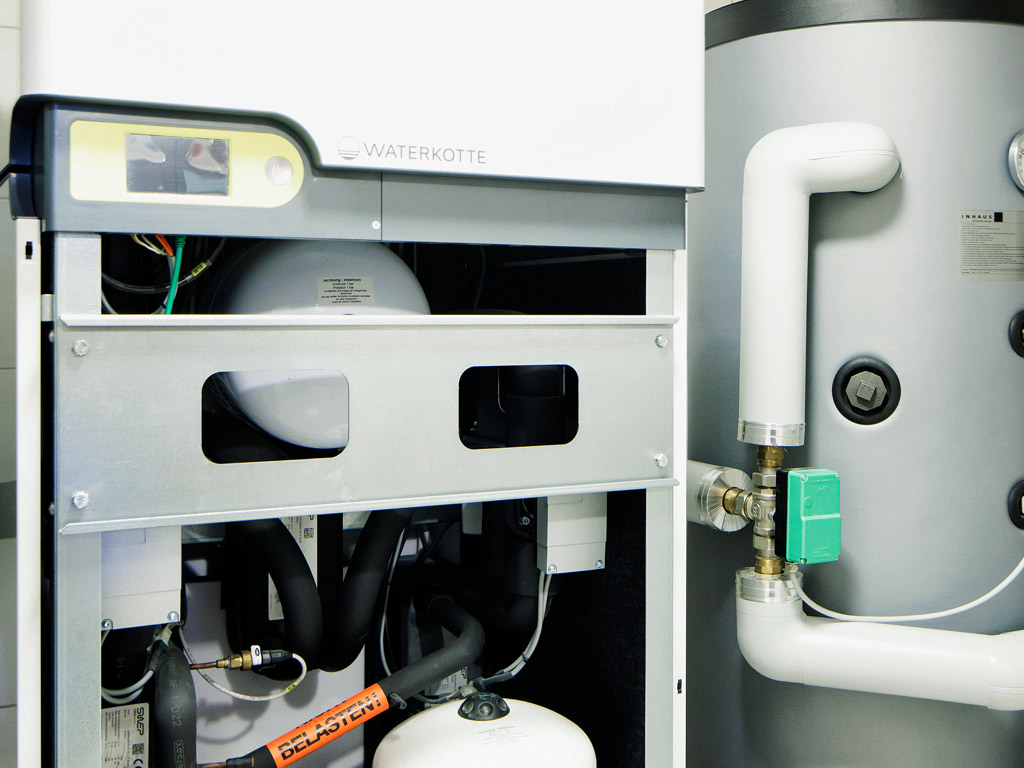
The KnowHowHP (Know-how Heat Pump) project provides energy consultants, planners and installers with an integrated planning and implementation process in which heat pumps and renovation concepts are optimally coordinated. The project was launched in November 2024 and will run for three years (October 2027).

The aim of the training and further education program is to make it easier to switch to heat pumps in existing apartment buildings and to increase the number of energy-efficient renovations.

© Markus Gmeiner
© Markus Gmeiner

While the use of heat pumps is already widespread and represents the state of the art in new builds, particularly in detached houses, this is not yet the case in renovations, especially in multi-storey residential buildings. In practice, heat pumps are often not yet recommended to customers in multi-storey buildings. The reason for this is the lack of specialist knowledge on how they can be sensibly integrated into a holistic conversion concept. The interplay between the building envelope, heat output, renewable energy and heat pump requires an integrated approach. This is often hastily abandoned in favor of easily explained and proven concepts (e.g. wood chip heating, infrared heating).

In several research and pilot projects, measurement results have shown that socially acceptable, climate-friendly refurbishment of multi-storey residential buildings with heat pumps is possible. The first common feature of the successful lighthouse projects is that an integrated refurbishment process with the use of digital planning tools led to success. Such high-quality knowledge-based and software-supported planning offers the following advantages:

  • Better quality, more cost‑effective solutions
  • Simpler, faster, more robust (pre-)planning
  • Better planning documents, faster and simpler implementation > Higher implementation rate
  • Better planning reliability >Lower risk, error avoidance, less rework, higher implementation rate
  • Better replicability/scalability > Higher conversion rate

The training and further education of those involved in consulting, planning and implementation should ensure that customers always get the ideal result, regardless of whether they first contact the installation company for the installation of a heat pump or an energy consultant or architect for a thermal refurbishment. Since the target groups of energy consultants, planners and installers deal with different topics and depths in renovation projects, they also require differently prepared training material. The project therefore pursues an approach based on three pillars. The planning process and the training material are adapted to the specific target group. For example, the building services planner is trained in the handling and application of the developed toolbox, while the energy consultant is trained more for the pre-design phase.

The intended result of the project is that heat pumps in multi-storey buildings are planned and used in the best possible way through a targeted combination of refurbishment measures and heating conversions. The training documents developed in the project contribute to making climate-friendly and socially acceptable refurbishments of multi-storey residential buildings in combination with heat pumps a reality through the knowledge-based and software-supported integral planning and implementation process.

Consortium Meeting in Rosenheim

On 13‑ 14 May 2025, the second KnowHowHP consortium meeting took place at Rosenheim University of Applied Sciences. Representatives from all project partners gathered to advance key topics, exchange insights, and plan concrete implementation steps for the coming months.
Read more "

BUILD UP Skills EU Exchange Meeting in Brussels

On 2. and On April 3, 2025, the 16th EU exchange meeting of the BUILD UP Skills Initiative took place in Brussels – a Europe-wide networking meeting for projects related to further training in the building sector. Thomas Roßkopf from the Vorarlberg Energy Institute presented the project as part of an interactive workshop.

Read more "